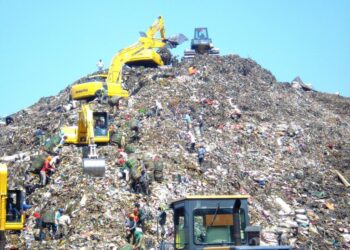
The global ecological crisis is now apparently increasing.
IPCC Sixth Assessment Report (2023) noted that the earth’s temperature has risen 1.1°C since the pre-industrial era and has the potential to reach 1.5°C by 2035. The impacts are visible in the melting of polar ice caps, rising sea levels, and extreme weather. In global examples the 2022 European heat wave killed more than 60,000 people (Romanello, Marina et al., 2023).
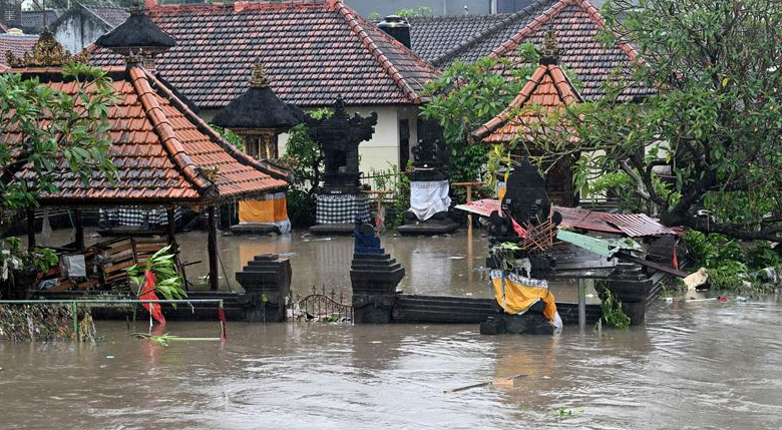
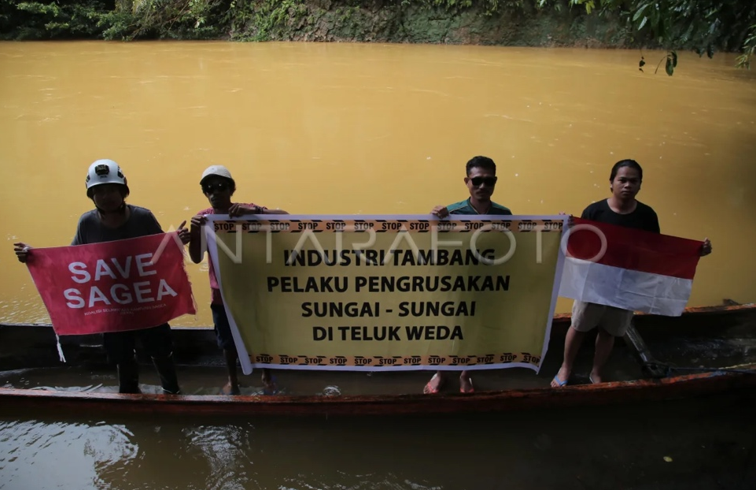
Then, in local context, ecological crisis in Indonesia demonstrates the close relationship between disasters and exploitative development, for example: 1) Floods in Bali (2022-2023 and 2025) occurred not only due to heavy rainfall, but also due to land conversion and tourism development that blocked water catchment areas; 2) Floods in Samarinda, East Borneo (2025) caused by coal mining activities that damaged water catchment areas, narrowed riverbeds, and increased sedimentation; 3) Pollution in Sagea River, Halmahera (2024) polluted water flow due to nickel mining activities that damaged the karst ecosystem and threatened local communities’ water sources. These cases demonstrate that ecological crises cannot be separated from politics of development.
Exploitation of nature under the interest of investment often results in damage that is then interpreted by society in a religious framework: as a “warning from God” or even a “sign of the end times.” This religious narrative can strengthen spiritual awareness, but it also risks creating fatalism. That is an attitude of fatalism that damage is part of the destiny of the end times, as if people on this world are incapable to maintain. This paper seeks to challenge this narrative by presenting the perspective of queer futurity (Halberstam and Muñoz) and the values of ecological Islam championed by progressive groups such as the Partai Hijau Indonesia/ PHI (Indonesian Green Party), Kader Hijau Muhammadiyah/ KHM (Muhammadiyah Green Cadres), and Front Nahdliyin untuk Kedaulatan Sumber Daya Alam/ FNKSDA (Nahdliyin Front for Natural Resource Sovereignty).
From queer futurity perspective, the ecological crisis is not the end of history, but rather a catalyst for imagining an alternative future: a just, sustainable, and compassionate ecological future. In many Muslim communities in Indonesia, ecological disasters are often interpreted as signs of the end times or warnings from God. For example, major floods are considered the result of human sin, not the result of exploitative development. On social media, the 2022-2023 Bali floods were often attributed to “God’s wrath” due to sinful tourism, rather than being criticized as a failure of spatial planning and environmental destruction. This narrative can strengthen moral awareness, but it has two major weaknesses: it obscures the structural and political dimensions of environmental damage (improper spatial planning and destructive investment; also, it fosters a fatalistic attitude: if everything is a sign of the apocalypse, then the ecological struggle is considered useless.
The Samarinda Floods cases in 2025, 70% of the area is surrounded by coal mines, the environmental impact of flooding is disguised as a “disaster” without mentioning the structural causes. They forgot to remind that in Samarinda they are surrounded by the role of mining oligarchies that caused environmental issues. Then, in Sagea River, Halmahera in 2024, a sacred and vital water source for residents, is polluted by nickel mining. Rather than being considered a “sign of the end times,” this damage is clearly the result of the greed of the extractive industry.
Progressive ecological movements in Indonesia including the Partai Hijau Indonesia (PHI) as a green political movement, alongside faith-based environmental initiatives such as Kader Hijau Muhammadiyah (KHM) and Front Nahdliyin untuk Kedaulatan Sumber Daya Alam (FNKSDA) interpret ecological disasters as social ethical and political crises of development rather than merely natural disasters. For them, the verses in Quran Ar-Rum: 41 about damage on land and sea due to the deeds of human hands should be read as a call to ecological resistance, not simply a sign of the apocalypse. For example, KHM emphasizes the interpretation of rahmatan lil ‘alamin (mercy for the universe) as the responsibility to protect the earth, PHI promotes a new political imagination that is environmentally friendly and anti-extractive, and FNKSDA links ecological damage to extractive capitalism and organizes citizen resistance.

In these cases, analysis using Queer Futurity and Green Islam, cannot interpret the ecological disasters using a linear logic again: sin → God’s wrath → disaster → end times. Now, the logic changed into human’s actions (greedy, unwise, careless) disaster → a call for change. This is what queer theory by Jack Halberstam (2005) called “straight time”, life and history are seen as moving in a single direction toward a definitive end. In the Islamic context, this narrative often arises when floods, landslides, or water crises are read solely as signs of the end of time, rather than as structural-political crises. José Esteban Muñoz writes in Cruising Utopia (2019) “Queerness is an ideality. Put another way, we are not yet queer. We may never touch queerness, but we can feel it as the warm illumination of a horizon imbued with potentiality. We have never been queer, yet queerness exists for us as an ideality that can be distilled from the past and used to imagine a future.” This means that queer is a future horizon that is not yet present but can be imagined and fought for. While Islamic apocalyptic logic tends to view disaster as the end, Muñoz encourages us to see it as a trigger for imagining alternative worlds. Muñoz-Martínez, et. al. (2025) in Tropical Futurisms: Thinking Futures: “tropical Futurisms situates the reading of futures in the shared yet multiple modalities of this geo-climatic zone, acknowledging the social and political complexities, technological engagements, multispecies vitalities, and cosmological plurality within tropical regions.”
Rakhmat (2022) said, “The concept of humans in Islamic theological discourse is defined as the center of universal consciousness through the concept of the vicegerent of God on earth (khalifah Allah fi al-Ard). Such a concept is often misunderstood as the legitimization of the supremacy of human power over other creatures on earth (anthropocentrism). Therefore, the objective of the study is to enrich studies on Islamic Ecotheology, especially related to the concept of khalifah and its relation to responsibility towards nature.” Together with queer futurity, these concepts provide a theological basis for imagining an Islamic ecological future that is just, merciful, and full of hope. Those relevant to Indonesia: Queer futurity must consider the tropical climate, local culture, and spirituality.
The Bali Floods case, popular interpretation often sees that “Allah sent the flood as a warning of a sinful area.” But, with alternative interpretation (green Islam and queer futurity), flood marks the end of exploitative tourism, it opens up an opportunity to imagine a just spatial planning for Bali, in line with the Islamic principle of the mandate to care for the earth. Samarinda Flood’s case, by popular interpretation, is seen as “a disaster from Allah, a sign of a corrupted era.” But with alternative interpretation, Samarinda Floods caused by coal mining are evidence of capitalist greed. From this, we can envision a post-coal future, in line with the vision of rahmatan lil ‘alamin (blessing for the universe) championed by the KHM and the FNKSDA. Lastly, in Sagea River, Halmahera, popular interpretation views “natural destruction as a sign of the apocalypse.” But, alternative interpretations interpret this phenomenon as river pollution by nickel mining is a political crisis in development, residents teach that the future must be built by preserving water as a source of life, in line with the spirit of mercy in Islam.
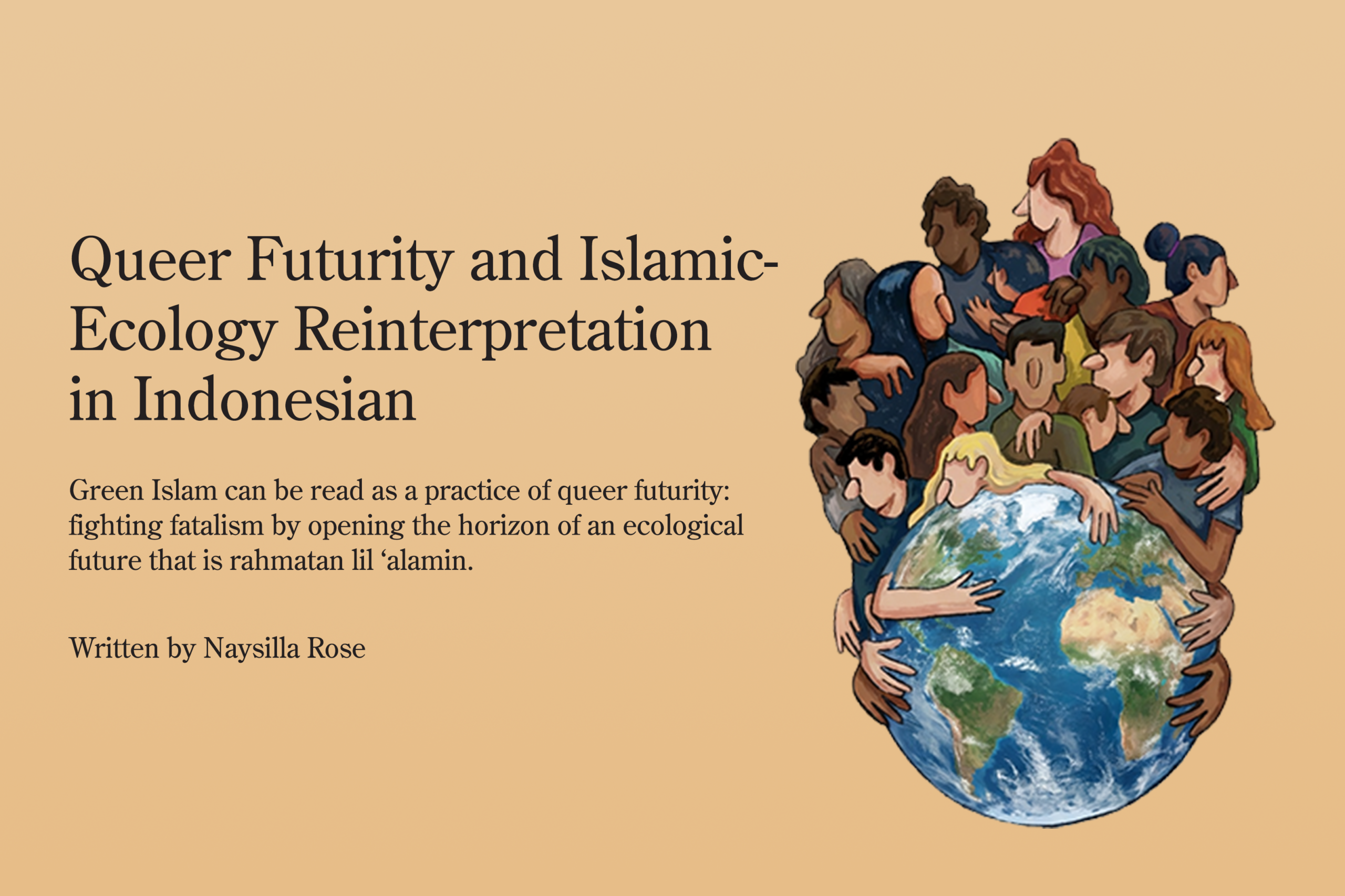
In QS. Ar-Rum verses 41: “Corruption has appeared on land and sea because of what the hands of men have earned, that Allah may make them taste a part of their deeds, in order that they may return (to the right path).” This verse is often understood as punishment, but it can also be read as an invitation to change. PHI, KHM, and FNKSDA groups emphasize that “returning” does not mean waiting for the apocalypse, but rather building just political-ecological practices: rejecting extractivism, promoting renewable energy, nurturing the human-nature relationship as part of God’s grace. The ecological crisis should not be read as the end of the world but can be a momentum for building a green future. Queer futurity provides a framework: the future is not something predetermined, but something that can be imagined and fought for. Islamic values (khalifah Allah fil-Ard, mercy, harmony, righteous deeds) provide a spiritual and ethical basis. The green Islamic movement (KHM, FNKSDA, PHI) demonstrates that an ecological utopia is not just a dream but is being fought for. Green Islam can be read as a practice of queer futurity: fighting fatalism by opening the horizon of an ecological future that is rahmatan lil ‘alamin
References

Al-Qur’an. Surah Ar-Rum 41.

Halberstam, Jack. In a Queer Time and Place: Transgender Bodies, Subcultural Lives. Vol. 3. New York: New York University Press, 2005.

Intergovernmental Panel on Climate Change (IPCC). AR6 Synthesis Report: Climate Change 2023. Accessed n.d. https://www.ipcc.ch/report/sixth-assessment-report-cycle/.

Muñoz, José Esteban. Cruising Utopia: The Then and There of Queer Futurity. 10th Anniversary ed. New York: New York University Press, 2019.

Muñoz-Martínez, Yecid, Jieying Hu, Nite Mala, and Anna Lundberg. "Tropical Futurisms: Thinking Futures." eTropic: Electronic Journal of Studies in the Tropics 24, no. 1 (2025): 1–25.

Rakhmat, Aulia. "Islamic Ecotheology: Understanding the Concept of Khalifah and the Ethical Responsibility of the Environment." Academic Journal of Islamic Principles and Philosophy 3, no. 1 (2022): 1–24.

Romanello, Marina, Chiara Di Napoli, Chloe Green, Harry Kennard, Peter Lampard, Daniel Scamman, and Anthony Costello. "The 2023 Report of the Lancet Countdown on Health and Climate Change: The Imperative for a Health-Centred Response in a World Facing Irreversible Harms." The Lancet 402, no. 10419 (2023): 2346–94.